
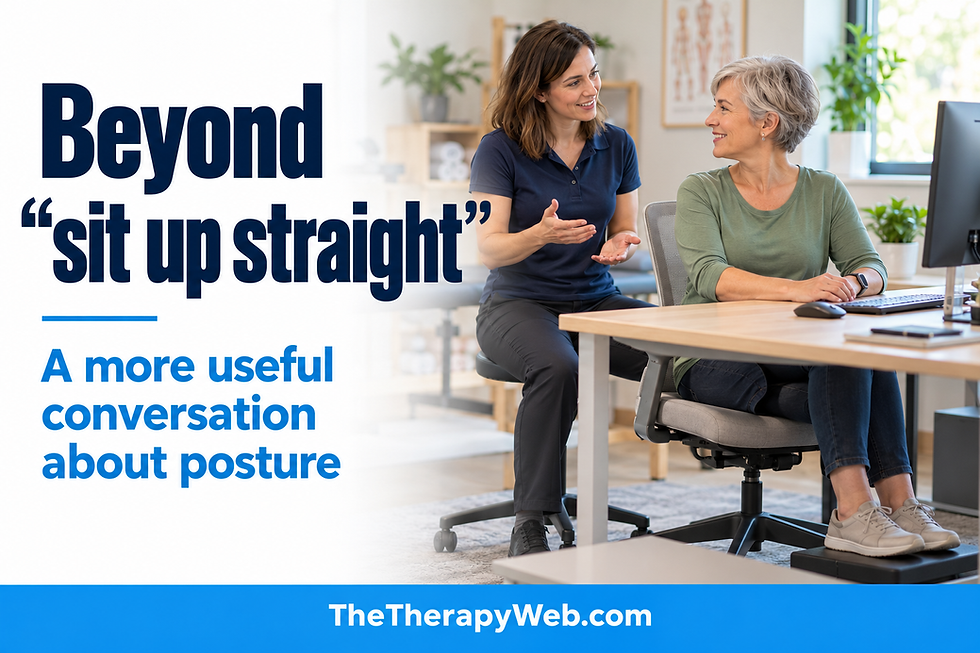
Beyond “sit up straight”: a more useful conversation about posture
“I know my posture is terrible.”
Many massage therapists, myotherapists and Bowen therapists hear this before they have even started an assessment. The client pulls their shoulders back, lifts their chest and demonstrates how they believe they should sit.
But what happens when holding that position becomes tiring?
Posture is something we do
Posture changes as we reach, breathe, shift our weight and respond to the task in front of us. A position that suits reading may differ from one that suits lifting, resting or working at a screen.
There is no strong evidence that one ideal posture prevents pain for everyone. This does not make positioning irrelevant: some positions are more comfortable than others for a particular person or activity. It does mean that appearance alone is an incomplete basis for advice.
A useful assessment explores how the person feels and functions, including how easily they can change position.
Look beyond the snapshot
Imagine a desk-based client who reports neck discomfort towards the end of the afternoon. They describe themselves as a “sloucher” and spend much of the day trying to keep their shoulders pulled back.
Instead of immediately reinforcing that correction, explore the working day. How long do they remain at the screen? Are their arms supported? Can they vary their tasks? Does relaxing the shoulders, adjusting the chair or getting up briefly change their comfort?
These are opportunities to test manageable changes together. The aim is to discover useful options, then review whether they help during the client’s actual working day.
Make room for variation
Research offers some support for this approach. In a six-month trial involving office workers at increased risk of neck and lower-back pain, interventions encouraging active breaks or postural shifts reduced the occurrence of new pain episodes compared with the control group. That finding supports exploring movement variation, although it does not establish one break schedule that suits everyone.
Advice can therefore be simple and individual: try another supported sitting position, stand for a suitable task or take a brief walk when practical. Observe what changes and adjust from there.
The practical takeaway: Alongside “How are you sitting?”, ask “How long are you staying there, how does it feel, and what other options do you have?”
For a deeper exploration of postural assessment and adaptability, our new two-hour course,
Posture as a Dynamic Process (Not a Position), is now available at TheTherapyWeb.com.


Comments